How all 50 states got their names

488324_4003210071627_336217644_n

Alabama

Before Europeans landed on American shores, the upper stretches of the Alabama River in present-day Alabama used to be the home lands of a Native American tribe called – drum roll, please – the Alabama (Albaamaha in their own tribal language). The river and the state both take their names from the tribe, that’s clear enough, but the meaning of the name was another matter. Despite a wealth of recorded encounters with the tribe – Hernando de Soto was the first to make contact with them, followed by other Spanish, French and British explorers and settlers (who referred to the tribe, variously, as the Albama, Alebamon, Alibama, Alibamou, Alibamon, Alabamu, Allibamou, Alibamo and Alibamu) – there are no explanations of the name’s meaning in the accounts of early explorers, so if the Europeans asked, they don’t appear to have gotten an answer. An un-bylined article in the July 27, 1842 edition of the Jacksonville Republican put forth the idea that the word meant “here we rest.” Alexander Beaufort Meek, who served as the Attorney General of Alabama, Assistant Secretary of the U.S. Treasury and the President of the First American Chess Congress, popularized this theory in his writings throughout the next decade.

The rub, of course, is that experts in the Alabama language have never been able to find any evidence to support that translation. What they did find are two words in the Choctaw language (both tribes’ languages are in the Muskogean language family), alba (“plants” or “weeds”) and amo (“to cut” or “to gather”), that together make Albaamo, or “plant gatherers.” We also know that the Alabama referred to a member of their tribe as an Albaamo, cleared land and practiced agriculture largely without tools and by hand and had contact with the neighboring Choctaws. Today, the prevailing theory is that the phrase was used by the Choctaws to describe their neighbors and the Alabama eventually adopted it as their own.

Alaska

Like Alabama (and, as we’ll see, plenty of other state names), the name Alaska comes from the language of the area’s indigenous people. The Aleuts (a name given to them by Russian fur traders in the mid 18th century; they used to, and sometimes still do, call themselves the Unangan), natives of the Aleutian Islands, referred to the Alaskan Peninsula and the mainland as alaxsxaq (ah-lock-shock), literally, “the object toward which the action of the sea is directed.”

Arizona

There are two sides in the argument over the origin of Arizona’s name. One side says that the name comes from the Basque aritz onak (“good oak”) and was applied to the territory because the oak trees reminded the Basque settlers in the area of their homeland. The other side says that the name comes from the Spanish Arizonac, which was derived from the O’odham (the language of the native Pima people) word ali ṣona-g(“having a little spring”), which might refer to actual springs or a site near rich veins of silver discovered in 1736. For what it’s worth, official Arizona state historian Marshall Trimble had supported the latter explanation but for now favors the former.

Arkansas

The first Europeans to arrive in the area of present-day Arkansas were French explorers accompanied by Illinois Indian guides. The Illinois referred to the Ugakhpa people native to the region as the Akansa (“wind people” or “people of the south wind”), which the French adopted and pronounced with an r. They added an s to the end for pluralization, and for some reason it stuck when the word was adopted as the state’s name. The pronunciation of Arkansas was a matter of debate (Ar-ken-saw vs. Ar-kan-zes) until it was officially decided by an act of the state legislature in 1881.

California

California existed in European literature way before Europeans settled the Western U.S. It wasn’t a state filled with vineyards and movie stars, but an island in the West Indies filled with gold and women. The fictional paradise, first mentioned in the early 1500s by Spanish author Garci Ordóñez de Montalvo in his novel Las Sergas de Esplandián, is ruled by Queen Califia and “inhabited by black women, without a single man among them, [living in] the manner of Amazons.” The island is said to be “one of the wildest in the world on account of the bold and craggy rocks… everywhere abounds with gold and precious stones” and is home to griffins and other mythical beasts.

While there is some consensus that the area was named for the fictional island, scholars have also suggested that the name comes from the Catalan words calor (“hot”) and forn (“oven”) or from a Native America phrase, kali forno (“high hill”).

Colorado

Colorado is a Spanish adjective that means “red.” The early Spanish explorers in the Rocky Mountain region named a river they found the Rio Colorado for the reddish silt that the water carried down from the mountains. When Colorado became a territory in 1861, the Spanish word was used as a name because it was commonly thought that the Rio Colorado originated in the territory. This was not the case, however. Prior to 1921, the Colorado River began where the Green River of Utah and the Grand River of Colorado converged outside of Moab, Utah, and the United States Geological Survey identified Green River of Wyoming as the Colorado’s actual headwaters. The Rio Colorado did not actually flow through Colorado until 1921, when House Joint Resolution 460 of the 66th United States Congress changed the name of the Grand River.

Connecticut

The state is named after the Connecticut River, which was named quinnitukqut by the Mohegans who lived in the eastern upper Thames valley. In their Algonquian language, the word means “long river place” or “beside the long tidal river.”

Delaware

Delaware is named for the Delaware River and Delaware Bay. These, in turn, were named for Sir Thomas West, 3rd Baron De La Warr, the first colonial governor of Virginia, who traveled the river in 1610. The title is likely ultimately derived from the Old French de la werre (“of the war” or a warrior).

Florida

Six days after Easter in 1513, the Spanish conquistador Juan Ponce de León landed near what is now the city of Saint Augustine. In honor of the holiday and the area’s plant life, he named the land Florida for the Spanish phrase for the Easter season, pascua florida (“feast of flowers”). The name is the oldest surviving European place-name in the U.S.

Georgia

In the early 18th century, the British Parliament assigned a committee to investigate the conditions of the country’s debtor prisons and didn’t like what they found. A group of philanthropists concerned with the plight of debtors proposed the creation of a colony in North America where the “worthy poor” could get back on their feet and be productive citizens again. Their plan ultimately didn’t pan out as the colony wasn’t settled by debtors, but the trustees of the colony still wanted to thank King George II for granting their charter, so they named the place after him.

(Bonus: The nation of Georgia is supposedly called so because its inhabitants revere St. George and feature his cross on their flag, though Georgians refer to themselves as Kartvelebi and their country as Sakartvelo.)

Hawaii

No one is certain, so take your pick. The name may come from the Proto-Polynesian Sawaiki or “homeland” (some early explorers’ accounts have the natives calling the place Hawaiki, a compound of hawa, “homeland,” and ii, “small, active”) or from Hawaii Loa, the Polynesian who tradition says discovered the islands.

Idaho

The origin of Idaho’s name, like a few other names we’ve already talked about, is a mystery. When it was proposed as the name of a new U.S. territory, it was explained as a derivation of the Shoshone Indian term ee-da-how, meaning “gem of the mountains” or “the sun comes from the mountains.” It’s possible that the word, and its Indian origin, were made up by the man who proposed the name, George M. Willing, an eccentric industrialist and mining lobbyist (not all historians and linguists agree on this, though, and the most common alternate explanation is that the name comes from the Apache word idaahe (“enemy”), which the Kiowas Indians applied to the Comanches they came in contact with when they migrated to southern Colorado). When Congress was considering establishing a mining territory in the Rocky Mountains in 1860, Willing and B. D. Williams, a delegate from the region, championed “Idaho.” The request for the name came up in the Senate in January 1861 and Senator Joseph Lane of Oregon objected to “Idaho,” saying, “I do not believe it is an Indian word. It is a corruption. No Indian tribe in this nation has that word, in my opinion… It is a corruption certainly, a counterfeit, and ought not to be adopted.” Lane was roundly ignored, probably because he had the bad luck of having been the vice presidential candidate for the pro-slavery southern wing of the Democratic Party in the previous year’s election.

After the Senate approved the name, Williams, for some reason, gave into curiosity and looked into Lane’s claim. He heard from several sources that Willing or someone in his group of territorial supporters had invented the name “Idaho” and that the word didn’t actually mean anything. Williams went back to the Senate and requested that the name be changed. The Senate agreed and used a name that had been on the table before Willing and Williams showed up: “Colorado.”

A year later, Congress set out to establish another mining territory in the northwest part of the continent. “Idaho” was again a contender as a name. Without Williams there to call shenanigans and with the senators who should have remembered the last naming incident just a little bit preoccupied with the Civil War, “Idaho” went unchallenged and became the name of the territory and the state.

Illinois

“Illinois” is the modern spelling of the early French explorers’ name for the people they found living in the area, which they spelled in endless variations in their records. The Europeans’ first meeting with the Illinois was in 1674. Father Jacques Marquette, a Jesuit missionary and explorer, followed a path to a village and asked the people there who they were. According to Marquette’s writings, “They replied that they were Ilinois…when one speaks the word…it is as if one said, in their language, ‘the men’.” The explorers thought the tribal name to signify a grown man in his prime, separate from, and superior to, the men of other tribes.

Indiana

The state’s name means “Indian Land” or “Land of the Indians,” named so for the Indian tribes that lived there when white settlers arrived. While its meaning might be simple enough, the way it got the name is a little more interesting. At the end of the French and Indian War, the French were forced out of the Ohio Valley, so a Philadelphia trading company moved in to monopolize trade with the Indians in the area. At the time, the tribes of the Iroquois had already formed a confederacy and conquered territory beyond their home lands, subjugating other tribes and treating them as tributaries. In the fall of 1763, members of the Shawnee and other tribes who were tributary to the Iroquois Confederacy conducted raids on traders from the Philadelphia company and stole their goods. The company complained to the chiefs of the Iroquois Confederacy and demanded restitution. The chiefs accepted responsibility for the behavior of their tributaries, but did not have the money to pay off the debt. Instead, when making a boundary treaty with the English five years later, the chiefs gave a 5,000-square-mile tract of land to the Philadelphia company, which accepted the land as payment.

The land’s new owners, in the search for a name, noted a trend in the way states and countries in both the Old World and New World were named. Bulgaria was the land of the Bulgars, Pennsylvania was the woodland of Penn, etc. They decided to honor the people to whom the land originally belonged and from whom it had been obtained and named it Indiana, land of the Indians. The year the colonies declared their independence from Britain, the Indiana land was transferred to a new company, who wanted to sell it. Some of the land, though, was within the boundaries of Virginia, which claimed that it had jurisdiction over the land’s settlers and forbade the company from selling it. In 1779, the company asked Congress to settle the matter. It made an attempt, but, still operating under Articles of Confederation, had no power to compel Virginia to do anything. The argument eventually went to the United States Supreme Court, but Virginia’s government officials, strong believers in states’ rights, refused to become involved with a federal court and ignored the summons to appear. In the meantime, Virginia’s politicians worked to secure the Eleventh Amendment, which protected the states’ sovereign immunity from being sued in federal court by someone of another state or country (and was proposed in response to a Supreme Court case dealing with Georgia’s refusal to appear to hear a suit against itself, in which the Supreme Court decided against Georgia).

After the amendment was passed and ratified, the company’s suit was dismissed and it lost its claim to the land, which was absorbed by Virginia. The name would come back in 1800, when Congress carved the state of Ohio out of the Northwest Territory and gave the name “Indiana” to the remaining territorial land and, 16 years later, a new state.

Iowa

Iowa’s name comes from the Native American tribe that once lived there, the Ioway. What the word means depends on who you ask.

One pioneer in the area wrote in 1868 that “some Indians in search of a new home encamped on a high bluff of the Iowa River near its mouth…and being much pleased with the location and the country around it, in their native dialect exclaimed, ‘Iowa, Iowa, Iowa’ (beautiful, beautiful, beautiful), hence the name Iowa to the river and to those Indians.” A report from the 1879 General Assembly of Iowa translated the word a little differently and claimed it meant “the beautiful land.” However, members of the Ioway Nation, who today inhabit Kansas, Nebraska and Oklahoma, will tell you that Ioway is the French spelling of Ayuhwa, a name meaning “sleepy ones” given to the tribe in jest by the Dakota Sioux. (The Ioway refer to themselves as Baxoje (bah-ko-jay) or “the gray/ashy heads,” a name that stems from an incident where tribe members were camping in the Iowa River valley and a gust of wind blew sand and campfire ashes onto their heads.)

Kansas

Kansas was named after the Kansas River, which was named after the Kansa tribe who lived along its banks. Kansa, a Siouan word, is thought to be pretty old. How old? Its full and original meaning was lost to the tribe before they even met their first white settler. Today, we only know that the word has some reference to the wind, possibly “people of the wind” or “people of the south wind.”

Kentucky

There is no consensus on where Kentucky’s name comes from. Among the possibilities, though, are various Indians words, all from the Iroquoian language group, meaning “meadow,” “prairie,” “at the prairie,” “at the field,” “land of tomorrow,” “river bottom,” and “the river of blood.”

Louisiana

Louisiana comes from the French La Louisiane, or “Land of Louis.” It was named for Louis XIV, the King of France from 1643 to 1715. Exciting, no?

Maine

Maine is another case where no one is quite sure how the name came about. Ferdinando Gorges and John Mason, who received a charter for land in Maine, were both English Royal Navy veterans, and the name may have originated with the sailors differentiating “the mainland” from the many islands off the state’s coast. Maine’s state legislature, meanwhile, passed a resolution in 2001 that established Franco-American Day and claimed that the state was named after the French province of Maine.

Maryland

The English colony of Maryland was named for Queen Henrietta Maria, the wife of King Charles I, who granted Maryland’s charter. Mariana was also proposed as a name, but Maryland’s founder, Sir Lord Baltimore, believed in the divine right of kings and turned the name down because it reminded him of the Spanish Jesuit and historian Juan de Mariana, who taught that the will of the people was higher than the law of tyrants.

Massachusetts

The Commonwealth of Massachusetts and the Massachusetts Bay Colony that preceded it were named after the area’s indigenous people, the Massachusett. The tribe’s name translates to “near the great hill,” referring to the Blue Hills southwest of Boston. An alternate form of the tribe’s name, the Moswetuset (“hill shaped like an arrowhead”), refers to the Moswetuset Hummock, an arrow-shaped mound in Quincy, MA.

Michigan

The state takes its name from Lake Michigan. Michigan is a French derivative of the Ojibwa word misshikama (mish-ih-GAH-muh), which translates to “big lake,” “large lake” or “large water.”

Minnesota

Minnesota is derived from the Dakota tribe’s name for the Minnesota River, mnisota (mni “water” + sota “cloudy, muddy;” sometimes translated to the more poetic “sky-tinted water”). The English language doesn’t really dig words beginning with mn (you’ll find only one, mnemonic), so early settlers in the region added some i‘s and produced a mini sound that they wrote as “mine.” The city of Minneapolis combines mni with the Greekpolis, or “city.”

Mississippi

The state is named for the Mississippi River. You may have heard that mississippi means “the Father of Waters” and you may have heard that from no less a source than novelist James Fenimore Cooper or President Abraham Lincoln (who wrote in a letter after the Civil War after Union victories during the Civil War, “the Father of Waters again goes unvexed to the sea”). I hate to pee on Honest Abe’s parade, but the word, a French derivation of the Ojibwa messipi (alternately misi-sipi or misi-ziibi) actually means “big river.” It may not sound as dramatic as Lincoln’s preferred translation, but whatever the meaning, the name caught on. As French explorers took the name down the river with them to the delta, it was adopted by local Indian tribes and replaced their own names, and the earlier Spanish explorers’ names, for the river.

Missouri

The state and the Missouri River are both named after the Missouri people, a southern Siouan tribe that lived along the river. Missouri comes from an Illinois language reference to the tribe, ouemessourita, which has been translated as “those who have dugout canoes,” “wooden canoe people” or “he of the big canoe.”

Montana

Montana is a variation of the Spanish montaña, or “mountain,” a name applied because of its numerous mountain ranges (3,510 mountain peaks, total). Who first used the name, and when, is unknown.

Nebraska

Nebraska comes from the archaic Otoe Indian words Ñí Brásge (in contemporary Otoe, it would be Ñí Bráhge), meaning “flat water.” The words refer to the Platte River, which flows across the Cornhusker State.

Nevada

The state’s name is the Spanish word for “snowfall” and refers to the Sierra Nevada (“snow-covered mountains”) mountain range. The non-Nevadan pronunciation of the name “neh-vah-dah” (long A sounds like the a in father) differs from the local pronunciation “nuh-vae-duh” (short A sounds like the a in alligator) and is said to annoy Nevadans endlessly.

New Hampshire

John Mason named the area he received in a land grant after the English county of Hampshire, where he had lived for several years as a child. Mason invested heavily in the clearing of land and building of houses in New Hampshire, but died, in England, before ever venturing to the new world to see his property.

New Jersey

New Jersey was named for Jersey, the largest of the British Channel Islands, by its founders Sir John Berkeley and Sir George Carteret. Carteret was born on Jersey and served as its Lieutenant Governor for several years.

New Mexico

New Mexico and the country it used to be part of, Mexico, both take their name from Nahuatl Mexihco. The meaning of the word is unclear, but there are several hypotheses. It might reference Mextli or Mēxihtli, an alternate name for Huitzilopochtli, the god of war and patron of the Aztecs, and mean “place where Mēxihtli lives”. It’s also been suggested that the word is a combination of mētztli (“moon”), xictli (“center”) and the suffix –co(“place”) and means “place at the center of the moon” (in reference to Lake Texcoco).

New York

Both the state and New York City were named for James Stuart, Duke of York and future King James II of England. The old York, a city in England, has been around since before the Romans made their way to the British Isles and the word York comes from the Romans’ Latin name for city, written variously as EboracumEburacum and Eburaci. Tracing the name further back is difficult, as the language of the area’s pre-Roman indigenous people was never recorded. They are thought to have spoken a Celtic language, though, and Eboracum may have been derived from the Brythonic Eborakon, which means “place of the yew trees.”

North Carolina

King Charles II of England, who granted a charter to start a colony in modern-day North Carolina, named the land in honor of his father, Charles I. Carolina comes from Carolus, the Latin form of Charles.

North Dakota

North and South Dakota both take their names from the Dakota, a tribe of Siouan people who lived in the region. No detailed etymology of Dakota is widely accepted, but the most common explanation is that it means “friend” or “ally” in the language of the Sioux.

Ohio

A common translation, “beautiful river,” originates in a French traveler’s 1750 account of visiting the region. He referred to the Ohio River as “une belle riviere” and gave its local Indian name as Ohio. People took his description of the river as a translation of the Indian name, though there is no evidence that that was his intention or that that is even a correct translation. In fact, no definitive meaning for the word is available, though ohiois more likely a Wyandot word meaning “large/great” or “the great one,” than “beautiful river.” It could also be derived from the Seneca ohi:yo’ (“large creek”).

Oklahoma

Oklahoma is a combination of the Choctaw words ukla (“person”) and humá (“red”). The word was used by the Choctaw to describe Native Americans, “red persons.” Allen Wright, chief of the Choctaw Nation from 1866 to 1870, suggested the name in 1866 during treaty negotiations with the federal government over the use of the Indian Territory. When the Indian Territory was whittled down to what is now Oklahoma, the new territory took its name from the Choctaw word.

Oregon

The origin of Oregon may be the most hotly debated of the state names. Here’s a few of the competing explanations (and I may have even missed a few):

– Derived from the French ouragan (“hurricane”) and the state named so because French explorers called the Columbia River le fleuve aux ouragans (“Hurricane River”) due to the strong winds in the Columbia Gorge.

– Derived from oolighan, a Chinook name for the eulachon (Thaleichthys pacificus), a smelt found along the Pacific coast and prized as a source of food for Native Americans in the area.

– Derived from the Spanish orejón (“big ears”), which early Spanish explorers reportedly used to refer to local natives.

– Derived from Ouragon, a word used by Major Robert Rogers in a 1765 petition asking the British government to finance and supply an overland search for the Northwest Passage. As to where Rogers got the word, it could have come from an error on a French-made map from the early 1700s, where the Ouisiconsink (“Wisconsin River”) is misspelled “Ouaricon-sint,” and broken so “Ouaricon” sits on a line by itself or it might have been derived from the Algonquian wauregan or olighin, which both mean “good and beautiful” (and were both used in reference to the Ohio River at the time).

– Derived from the Shoshone words Ogwa (river) and Pe-On (west) and picked up from the Sioux, who referred to the Columbia as the “River of the West,” by American explorer Jonathan Carver.

Pennsylvania

Named in honor of Admiral William Penn. The land was granted to Penn’s son, William Penn, to pay off a debt owed by the crown to the senior Penn. The name is made up of Penn + sylva (“woods” ) + nia (a noun suffix) to get “Penn’s Woodland.” The younger Penn was embarrassed by the name and feared that people would think he had named the colony after himself, but King Charles would not rename the land.

Rhode Island

First used in a letter by Italian explorer Giovanni da Verrazzano, in which he compares an island near the mouth of Narragansett Bay (a bay on the north side of Rhode Island Sound) to the island of Rhodes in the Mediterranean. The explanation preferred by the state government is that Dutch explorer Adrian Block named the area Roodt Eylandt (“red island”) in reference to the red clay that lined the shore and the name was later anglicized under British rule.

South Carolina

See North Carolina above.

South Dakota

North and South Dakota both take their names from the Dakota, a tribe of Siouan people who lived in the region. No detailed etymology of Dakota is widely accepted, but the most common explanation is that it means “friend” or “ally” in the language of the Sioux.

Tennessee

While traveling inland from South Carolina in 1567, Spanish explorer Juan Pardo passed through a Native American village in modern-day Tennessee named Tanasqui. Almost two centuries later, British traders came upon a Cherokee village called Tanasi (in present-day Monroe County, Tennessee). No one knows whether Tanasi and Tanasqui were actually the same village, though it is known that Tanasi was located on the Little Tennessee River and recent research suggests that Tanasqui was close to the confluence of the Pigeon River and the French Broad River (near modern-day Newport). Tennessee could have come from either one of these village names, but the meanings of both words have since been lost.

Texas

Texas comes from teysha (sometimes spelled tejastayshastexiasthecastechanteysas, or techas), a word widely used by the natives of the eastern Texas region before the arrival of the Spanish. The tribes had various spellings and interpretations of the word, but the usual meaning was “friends” or “allies.” Some tribes, like the Hasinais and the Caddo, used it as a greeting, “hello, friend.” This is the usage that Spanish explorers picked up and used to greet friendly tribes throughout Texas and Oklahoma. The explorers also applied the word as a name for the Caddo people and the area around their East Texas settlement.

Utah

Derived from the name of the native tribe known as the Nuutsiu or Utes (which itself may come from the Apache yudahyiuta or yuttahih, meaning “they who are higher up”), whom the Spanish first encountered in modern-day Utah in the late 1500s. In the tribe’s language, ute means “Land of the Sun.” (The tribe referred to themselves as the “Nuciu” or “Noochew,” which simply means “The People.”)

Vermont

Derived from the French words vert (“green”) and mont (“mountain”). Samuel Peters claimed that he christened the land with that name in 1763 while standing on top of a mountain, saying, “The new name is Vert-Mont, in token that her mountains and hills shall be ever green and shall never die.” Most historians would disagree, as would Thomas Young, the Pennsylvania statesman who suggested that his state’s constitution be used as the basis for Vermont’s and is generally credited with suggesting the name to maintain the memory of the Green Mountain Boys, the militia organization formed to resist New York’s attempted take-over of the area.

Virginia

Named for Queen Elizabeth I of England (known as the Virgin Queen), who granted Walter Raleigh the charter to form a colony north of Spanish Florida.

Washington

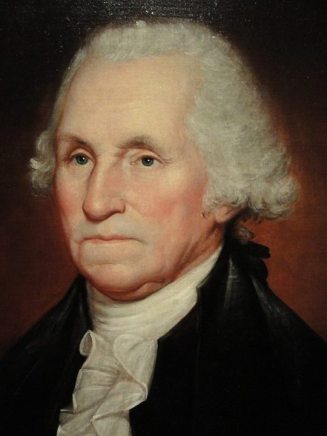
Named in honor of the first president of the United States, George Washington. In the eastern US, the state is referred to as Washington State or the state of Washington to distinguish it from the District of Columbia, which they usually just call “Washington”, “D.C.” or, if they’re very local, “the District.” Washingtonians and other Pacific Northwesterners simply call the state “Washington” and refer to the national capital as “Washington, D.C.” or just “D.C.”

West Virginia

West Virginia, formed from 39 Virginia counties whose residents voted to form a new state rather than join the Confederacy, was named after the same queen as the state it split from, though the new state was originally to be called Kanawha.

Wisconsin

Derived from Meskousing, the name applied to the Wisconsin River by the Algonquian-speaking tribes in the region. The French explorer Jacques Marquette recorded the name in 1673, and the word was eventually corrupted into Ouisconsin, anglicized to its modern form during the early 19th century, and its current spelling made official by the territorial legislature in 1845. Modern linguists had been unable to find any word in an Algonquian language similar to the one Marquette recorded, and now believe that the tribes borrowed the name from the Miami meskonsing, or “it lies red,” a reference to the reddish sandstone of the Wisconsin Dells.

Wyoming

Derived from the Delaware (Lenape) Indian word mecheweami-ing (“at/on the big plains”), which the tribe used to refer their home region in Pennsylvania (which was eventually named the Wyoming Valley [Wilkes-Barre represent!]). Other names considered for the new territory were Cheyenne, Shoshoni, Arapaho, Sioux, Platte, Big Horn, Yellowstone and Sweetwater, but Wyoming was chosen because it was already in common use by the territory’s settlers.

Read and think…

1917213_1271786747751_6410516_n

“A democracy is always temporary in nature; it simply cannot exist as a permanent form of government. A democracy will continue to exist up until the time that voters discover that they can vote themselves generous gifts from the public treasury. From that moment on, the majority always votes for the candidates who promise the most benefits from the public treasury, with the result that every democracy will finally collapse due to loose fiscal policy, which is always followed by a dictatorship.”

The average age of the world’s greatest civilizations from the beginning of history has been about 200 years. During those 200 years, these nations always progressed through the following sequence:

From bondage to spiritual faith;
From spiritual faith to great courage;
From courage to liberty;
From liberty to abundance;
From abundance to complacency;
From complacency to apathy;
From apathy to dependence;
From dependence back into bondage.”

— Attributed to a Scottish professor of the 18th century, Dr.Alexander Tyler.

Definitely worth a read…take your time doing so.

Transcript of President George Washington’s Farewell Address (1796)

970507_10200546459556952_659558330_n
Friends and Fellow Citizens:

The period for a new election of a citizen to administer the executive government of the United States being not far distant, and the time actually arrived when your thoughts must be employed in designating the person who is to be clothed with that important trust, it appears to me proper, especially as it may conduce to a more distinct expression of the public voice, that I should now apprise you of the resolution I have formed, to decline being considered among the number of those out of whom a choice is to be made.

I beg you, at the same time, to do me the justice to be assured that this resolution has not been taken without a strict regard to all the considerations appertaining to the relation which binds a dutiful citizen to his country; and that in withdrawing the tender of service, which silence in my situation might imply, I am influenced by no diminution of zeal for your future interest, no deficiency of grateful respect for your past kindness, but am supported by a full conviction that the step is compatible with both.

The acceptance of, and continuance hitherto in, the office to which your suffrages have twice called me have been a uniform sacrifice of inclination to the opinion of duty and to a deference for what appeared to be your desire. I constantly hoped that it would have been much earlier in my power, consistently with motives which I was not at liberty to disregard, to return to that retirement from which I had been reluctantly drawn. The strength of my inclination to do this, previous to the last election, had even led to the preparation of an address to declare it to you; but mature reflection on the then perplexed and critical posture of our affairs with foreign nations, and the unanimous advice of persons entitled to my confidence, impelled me to abandon the idea.

I rejoice that the state of your concerns, external as well as internal, no longer renders the pursuit of inclination incompatible with the sentiment of duty or propriety, and am persuaded, whatever partiality may be retained for my services, that, in the present circumstances of our country, you will not disapprove my determination to retire.

The impressions with which I first undertook the arduous trust were explained on the proper occasion. In the discharge of this trust, I will only say that I have, with good intentions, contributed towards the organization and administration of the government the best exertions of which a very fallible judgment was capable. Not unconscious in the outset of the inferiority of my qualifications, experience in my own eyes, perhaps still more in the eyes of others, has strengthened the motives to diffidence of myself; and every day the increasing weight of years admonishes me more and more that the shade of retirement is as necessary to me as it will be welcome. Satisfied that if any circumstances have given peculiar value to my services, they were temporary, I have the consolation to believe that, while choice and prudence invite me to quit the political scene, patriotism does not forbid it.

In looking forward to the moment which is intended to terminate the career of my public life, my feelings do not permit me to suspend the deep acknowledgment of that debt of gratitude which I owe to my beloved country for the many honors it has conferred upon me; still more for the steadfast confidence with which it has supported me; and for the opportunities I have thence enjoyed of manifesting my inviolable attachment, by services faithful and persevering, though in usefulness unequal to my zeal. If benefits have resulted to our country from these services, let it always be remembered to your praise, and as an instructive example in our annals, that under circumstances in which the passions, agitated in every direction, were liable to mislead, amidst appearances sometimes dubious, vicissitudes of fortune often discouraging, in situations in which not unfrequently want of success has countenanced the spirit of criticism, the constancy of your support was the essential prop of the efforts, and a guarantee of the plans by which they were effected. Profoundly penetrated with this idea, I shall carry it with me to my grave, as a strong incitement to unceasing vows that heaven may continue to you the choicest tokens of its beneficence; that your union and brotherly affection may be perpetual; that the free Constitution, which is the work of your hands, may be sacredly maintained; that its administration in every department may be stamped with wisdom and virtue; that, in fine, the happiness of the people of these States, under the auspices of liberty, may be made complete by so careful a preservation and so prudent a use of this blessing as will acquire to them the glory of recommending it to the applause, the affection, and adoption of every nation which is yet a stranger to it.

Here, perhaps, I ought to stop. But a solicitude for your welfare, which cannot end but with my life, and the apprehension of danger, natural to that solicitude, urge me, on an occasion like the present, to offer to your solemn contemplation, and to recommend to your frequent review, some sentiments which are the result of much reflection, of no inconsiderable observation, and which appear to me all-important to the permanency of your felicity as a people. These will be offered to you with the more freedom, as you can only see in them the disinterested warnings of a parting friend, who can possibly have no personal motive to bias his counsel. Nor can I forget, as an encouragement to it, your indulgent reception of my sentiments on a former and not dissimilar occasion.

Interwoven as is the love of liberty with every ligament of your hearts, no recommendation of mine is necessary to fortify or confirm the attachment.

The unity of government which constitutes you one people is also now dear to you. It is justly so, for it is a main pillar in the edifice of your real independence, the support of your tranquility at home, your peace abroad; of your safety; of your prosperity; of that very liberty which you so highly prize. But as it is easy to foresee that, from different causes and from different quarters, much pains will be taken, many artifices employed to weaken in your minds the conviction of this truth; as this is the point in your political fortress against which the batteries of internal and external enemies will be most constantly and actively (though often covertly and insidiously) directed, it is of infinite moment that you should properly estimate the immense value of your national union to your collective and individual happiness; that you should cherish a cordial, habitual, and immovable attachment to it; accustoming yourselves to think and speak of it as of the palladium of your political safety and prosperity; watching for its preservation with jealous anxiety; discountenancing whatever may suggest even a suspicion that it can in any event be abandoned; and indignantly frowning upon the first dawning of every attempt to alienate any portion of our country from the rest, or to enfeeble the sacred ties which now link together the various parts.

For this you have every inducement of sympathy and interest. Citizens, by birth or choice, of a common country, that country has a right to concentrate your affections. The name of American, which belongs to you in your national capacity, must always exalt the just pride of patriotism more than any appellation derived from local discriminations. With slight shades of difference, you have the same religion, manners, habits, and political principles. You have in a common cause fought and triumphed together; the independence and liberty you possess are the work of joint counsels, and joint efforts of common dangers, sufferings, and successes.

But these considerations, however powerfully they address themselves to your sensibility, are greatly outweighed by those which apply more immediately to your interest. Here every portion of our country finds the most commanding motives for carefully guarding and preserving the union of the whole.

The North, in an unrestrained intercourse with the South, protected by the equal laws of a common government, finds in the productions of the latter great additional resources of maritime and commercial enterprise and precious materials of manufacturing industry. The South, in the same intercourse, benefiting by the agency of the North, sees its agriculture grow and its commerce expand. Turning partly into its own channels the seamen of the North, it finds its particular navigation invigorated; and, while it contributes, in different ways, to nourish and increase the general mass of the national navigation, it looks forward to the protection of a maritime strength, to which itself is unequally adapted. The East, in a like intercourse with the West, already finds, and in the progressive improvement of interior communications by land and water, will more and more find a valuable vent for the commodities which it brings from abroad, or manufactures at home. The West derives from the East supplies requisite to its growth and comfort, and, what is perhaps of still greater consequence, it must of necessity owe the secure enjoyment of indispensable outlets for its own productions to the weight, influence, and the future maritime strength of the Atlantic side of the Union, directed by an indissoluble community of interest as one nation. Any other tenure by which the West can hold this essential advantage, whether derived from its own separate strength, or from an apostate and unnatural connection with any foreign power, must be intrinsically precarious.

While, then, every part of our country thus feels an immediate and particular interest in union, all the parts combined cannot fail to find in the united mass of means and efforts greater strength, greater resource, proportionably greater security from external danger, a less frequent interruption of their peace by foreign nations; and, what is of inestimable value, they must derive from union an exemption from those broils and wars between themselves, which so frequently afflict neighboring countries not tied together by the same governments, which their own rival ships alone would be sufficient to produce, but which opposite foreign alliances, attachments, and intrigues would stimulate and embitter. Hence, likewise, they will avoid the necessity of those overgrown military establishments which, under any form of government, are inauspicious to liberty, and which are to be regarded as particularly hostile to republican liberty. In this sense it is that your union ought to be considered as a main prop of your liberty, and that the love of the one ought to endear to you the preservation of the other.

These considerations speak a persuasive language to every reflecting and virtuous mind, and exhibit the continuance of the Union as a primary object of patriotic desire. Is there a doubt whether a common government can embrace so large a sphere? Let experience solve it. To listen to mere speculation in such a case were criminal. We are authorized to hope that a proper organization of the whole with the auxiliary agency of governments for the respective subdivisions, will afford a happy issue to the experiment. It is well worth a fair and full experiment. With such powerful and obvious motives to union, affecting all parts of our country, while experience shall not have demonstrated its impracticability, there will always be reason to distrust the patriotism of those who in any quarter may endeavor to weaken its bands.

In contemplating the causes which may disturb our Union, it occurs as matter of serious concern that any ground should have been furnished for characterizing parties by geographical discriminations, Northern and Southern, Atlantic and Western; whence designing men may endeavor to excite a belief that there is a real difference of local interests and views. One of the expedients of party to acquire influence within particular districts is to misrepresent the opinions and aims of other districts. You cannot shield yourselves too much against the jealousies and heartburnings which spring from these misrepresentations; they tend to render alien to each other those who ought to be bound together by fraternal affection. The inhabitants of our Western country have lately had a useful lesson on this head; they have seen, in the negotiation by the Executive, and in the unanimous ratification by the Senate, of the treaty with Spain, and in the universal satisfaction at that event, throughout the United States, a decisive proof how unfounded were the suspicions propagated among them of a policy in the General Government and in the Atlantic States unfriendly to their interests in regard to the Mississippi; they have been witnesses to the formation of two treaties, that with Great Britain, and that with Spain, which secure to them everything they could desire, in respect to our foreign relations, towards confirming their prosperity. Will it not be their wisdom to rely for the preservation of these advantages on the Union by which they were procured ? Will they not henceforth be deaf to those advisers, if such there are, who would sever them from their brethren and connect them with aliens?

To the efficacy and permanency of your Union, a government for the whole is indispensable. No alliance, however strict, between the parts can be an adequate substitute; they must inevitably experience the infractions and interruptions which all alliances in all times have experienced. Sensible of this momentous truth, you have improved upon your first essay, by the adoption of a constitution of government better calculated than your former for an intimate union, and for the efficacious management of your common concerns. This government, the offspring of our own choice, uninfluenced and unawed, adopted upon full investigation and mature deliberation, completely free in its principles, in the distribution of its powers, uniting security with energy, and containing within itself a provision for its own amendment, has a just claim to your confidence and your support. Respect for its authority, compliance with its laws, acquiescence in its measures, are duties enjoined by the fundamental maxims of true liberty. The basis of our political systems is the right of the people to make and to alter their constitutions of government. But the Constitution which at any time exists, till changed by an explicit and authentic act of the whole people, is sacredly obligatory upon all. The very idea of the power and the right of the people to establish government presupposes the duty of every individual to obey the established government.

All obstructions to the execution of the laws, all combinations and associations, under whatever plausible character, with the real design to direct, control, counteract, or awe the regular deliberation and action of the constituted authorities, are destructive of this fundamental principle, and of fatal tendency. They serve to organize faction, to give it an artificial and extraordinary force; to put, in the place of the delegated will of the nation the will of a party, often a small but artful and enterprising minority of the community; and, according to the alternate triumphs of different parties, to make the public administration the mirror of the ill-concerted and incongruous projects of faction, rather than the organ of consistent and wholesome plans digested by common counsels and modified by mutual interests.

However combinations or associations of the above description may now and then answer popular ends, they are likely, in the course of time and things, to become potent engines, by which cunning, ambitious, and unprincipled men will be enabled to subvert the power of the people and to usurp for themselves the reins of government, destroying afterwards the very engines which have lifted them to unjust dominion.

Towards the preservation of your government, and the permanency of your present happy state, it is requisite, not only that you steadily discountenance irregular oppositions to its acknowledged authority, but also that you resist with care the spirit of innovation upon its principles, however specious the pretexts. One method of assault may be to effect, in the forms of the Constitution, alterations which will impair the energy of the system, and thus to undermine what cannot be directly overthrown. In all the changes to which you may be invited, remember that time and habit are at least as necessary to fix the true character of governments as of other human institutions; that experience is the surest standard by which to test the real tendency of the existing constitution of a country; that facility in changes, upon the credit of mere hypothesis and opinion, exposes to perpetual change, from the endless variety of hypothesis and opinion; and remember, especially, that for the efficient management of your common interests, in a country so extensive as ours, a government of as much vigor as is consistent with the perfect security of liberty is indispensable. Liberty itself will find in such a government, with powers properly distributed and adjusted, its surest guardian. It is, indeed, little else than a name, where the government is too feeble to withstand the enterprises of faction, to confine each member of the society within the limits prescribed by the laws, and to maintain all in the secure and tranquil enjoyment of the rights of person and property.

I have already intimated to you the danger of parties in the State, with particular reference to the founding of them on geographical discriminations. Let me now take a more comprehensive view, and warn you in the most solemn manner against the baneful effects of the spirit of party generally.

This spirit, unfortunately, is inseparable from our nature, having its root in the strongest passions of the human mind. It exists under different shapes in all governments, more or less stifled, controlled, or repressed; but, in those of the popular form, it is seen in its greatest rankness, and is truly their worst enemy.

The alternate domination of one faction over another, sharpened by the spirit of revenge, natural to party dissension, which in different ages and countries has perpetrated the most horrid enormities, is itself a frightful despotism. But this leads at length to a more formal and permanent despotism. The disorders and miseries which result gradually incline the minds of men to seek security and repose in the absolute power of an individual; and sooner or later the chief of some prevailing faction, more able or more fortunate than his competitors, turns this disposition to the purposes of his own elevation, on the ruins of public liberty.

Without looking forward to an extremity of this kind (which nevertheless ought not to be entirely out of sight), the common and continual mischiefs of the spirit of party are sufficient to make it the interest and duty of a wise people to discourage and restrain it.

It serves always to distract the public councils and enfeeble the public administration. It agitates the community with ill-founded jealousies and false alarms, kindles the animosity of one part against another, foments occasionally riot and insurrection. It opens the door to foreign influence and corruption, which finds a facilitated access to the government itself through the channels of party passions. Thus the policy and the will of one country are subjected to the policy and will of another.

There is an opinion that parties in free countries are useful checks upon the administration of the government and serve to keep alive the spirit of liberty. This within certain limits is probably true; and in governments of a monarchical cast, patriotism may look with indulgence, if not with favor, upon the spirit of party. But in those of the popular character, in governments purely elective, it is a spirit not to be encouraged. From their natural tendency, it is certain there will always be enough of that spirit for every salutary purpose. And there being constant danger of excess, the effort ought to be by force of public opinion, to mitigate and assuage it. A fire not to be quenched, it demands a uniform vigilance to prevent its bursting into a flame, lest, instead of warming, it should consume.

It is important, likewise, that the habits of thinking in a free country should inspire caution in those entrusted with its administration, to confine themselves within their respective constitutional spheres, avoiding in the exercise of the powers of one department to encroach upon another. The spirit of encroachment tends to consolidate the powers of all the departments in one, and thus to create, whatever the form of government, a real despotism. A just estimate of that love of power, and proneness to abuse it, which predominates in the human heart, is sufficient to satisfy us of the truth of this position. The necessity of reciprocal checks in the exercise of political power, by dividing and distributing it into different depositaries, and constituting each the guardian of the public weal against invasions by the others, has been evinced by experiments ancient and modern; some of them in our country and under our own eyes. To preserve them must be as necessary as to institute them. If, in the opinion of the people, the distribution or modification of the constitutional powers be in any particular wrong, let it be corrected by an amendment in the way which the Constitution designates. But let there be no change by usurpation; for though this, in one instance, may be the instrument of good, it is the customary weapon by which free governments are destroyed. The precedent must always greatly overbalance in permanent evil any partial or transient benefit, which the use can at any time yield.

Of all the dispositions and habits which lead to political prosperity, religion and morality are indispensable supports. In vain would that man claim the tribute of patriotism, who should labor to subvert these great pillars of human happiness, these firmest props of the duties of men and citizens. The mere politician, equally with the pious man, ought to respect and to cherish them. A volume could not trace all their connections with private and public felicity. Let it simply be asked: Where is the security for property, for reputation, for life, if the sense of religious obligation desert the oaths which are the instruments of investigation in courts of justice ? And let us with caution indulge the supposition that morality can be maintained without religion. Whatever may be conceded to the influence of refined education on minds of peculiar structure, reason and experience both forbid us to expect that national morality can prevail in exclusion of religious principle.

It is substantially true that virtue or morality is a necessary spring of popular government. The rule, indeed, extends with more or less force to every species of free government. Who that is a sincere friend to it can look with indifference upon attempts to shake the foundation of the fabric?

Promote then, as an object of primary importance, institutions for the general diffusion of knowledge. In proportion as the structure of a government gives force to public opinion, it is essential that public opinion should be enlightened.

As a very important source of strength and security, cherish public credit. One method of preserving it is to use it as sparingly as possible, avoiding occasions of expense by cultivating peace, but remembering also that timely disbursements to prepare for danger frequently prevent much greater disbursements to repel it, avoiding likewise the accumulation of debt, not only by shunning occasions of expense, but by vigorous exertion in time of peace to discharge the debts which unavoidable wars may have occasioned, not ungenerously throwing upon posterity the burden which we ourselves ought to bear. The execution of these maxims belongs to your representatives, but it is necessary that public opinion should co-operate. To facilitate to them the performance of their duty, it is essential that you should practically bear in mind that towards the payment of debts there must be revenue; that to have revenue there must be taxes; that no taxes can be devised which are not more or less inconvenient and unpleasant; that the intrinsic embarrassment, inseparable from the selection of the proper objects (which is always a choice of difficulties), ought to be a decisive motive for a candid construction of the conduct of the government in making it, and for a spirit of acquiescence in the measures for obtaining revenue, which the public exigencies may at any time dictate.

Observe good faith and justice towards all nations; cultivate peace and harmony with all. Religion and morality enjoin this conduct; and can it be, that good policy does not equally enjoin it? It will be worthy of a free, enlightened, and at no distant period, a great nation, to give to mankind the magnanimous and too novel example of a people always guided by an exalted justice and benevolence. Who can doubt that, in the course of time and things, the fruits of such a plan would richly repay any temporary advantages which might be lost by a steady adherence to it ? Can it be that Providence has not connected the permanent felicity of a nation with its virtue ? The experiment, at least, is recommended by every sentiment which ennobles human nature. Alas! is it rendered impossible by its vices?

In the execution of such a plan, nothing is more essential than that permanent, inveterate antipathies against particular nations, and passionate attachments for others, should be excluded; and that, in place of them, just and amicable feelings towards all should be cultivated. The nation which indulges towards another a habitual hatred or a habitual fondness is in some degree a slave. It is a slave to its animosity or to its affection, either of which is sufficient to lead it astray from its duty and its interest. Antipathy in one nation against another disposes each more readily to offer insult and injury, to lay hold of slight causes of umbrage, and to be haughty and intractable, when accidental or trifling occasions of dispute occur. Hence, frequent collisions, obstinate, envenomed, and bloody contests. The nation, prompted by ill-will and resentment, sometimes impels to war the government, contrary to the best calculations of policy. The government sometimes participates in the national propensity, and adopts through passion what reason would reject; at other times it makes the animosity of the nation subservient to projects of hostility instigated by pride, ambition, and other sinister and pernicious motives. The peace often, sometimes perhaps the liberty, of nations, has been the victim.

So likewise, a passionate attachment of one nation for another produces a variety of evils. Sympathy for the favorite nation, facilitating the illusion of an imaginary common interest in cases where no real common interest exists, and infusing into one the enmities of the other, betrays the former into a participation in the quarrels and wars of the latter without adequate inducement or justification. It leads also to concessions to the favorite nation of privileges denied to others which is apt doubly to injure the nation making the concessions; by unnecessarily parting with what ought to have been retained, and by exciting jealousy, ill-will, and a disposition to retaliate, in the parties from whom equal privileges are withheld. And it gives to ambitious, corrupted, or deluded citizens (who devote themselves to the favorite nation), facility to betray or sacrifice the interests of their own country, without odium, sometimes even with popularity; gilding, with the appearances of a virtuous sense of obligation, a commendable deference for public opinion, or a laudable zeal for public good, the base or foolish compliances of ambition, corruption, or infatuation.

As avenues to foreign influence in innumerable ways, such attachments are particularly alarming to the truly enlightened and independent patriot. How many opportunities do they afford to tamper with domestic factions, to practice the arts of seduction, to mislead public opinion, to influence or awe the public councils? Such an attachment of a small or weak towards a great and powerful nation dooms the former to be the satellite of the latter.

Against the insidious wiles of foreign influence (I conjure you to believe me, fellow-citizens) the jealousy of a free people ought to be constantly awake, since history and experience prove that foreign influence is one of the most baneful foes of republican government. But that jealousy to be useful must be impartial; else it becomes the instrument of the very influence to be avoided, instead of a defense against it. Excessive partiality for one foreign nation and excessive dislike of another cause those whom they actuate to see danger only on one side, and serve to veil and even second the arts of influence on the other. Real patriots who may resist the intrigues of the favorite are liable to become suspected and odious, while its tools and dupes usurp the applause and confidence of the people, to surrender their interests.

The great rule of conduct for us in regard to foreign nations is in extending our commercial relations, to have with them as little political connection as possible. So far as we have already formed engagements, let them be fulfilled with perfect good faith. Here let us stop. Europe has a set of primary interests which to us have none; or a very remote relation. Hence she must be engaged in frequent controversies, the causes of which are essentially foreign to our concerns. Hence, therefore, it must be unwise in us to implicate ourselves by artificial ties in the ordinary vicissitudes of her politics, or the ordinary combinations and collisions of her friendships or enmities.

Our detached and distant situation invites and enables us to pursue a different course. If we remain one people under an efficient government. the period is not far off when we may defy material injury from external annoyance; when we may take such an attitude as will cause the neutrality we may at any time resolve upon to be scrupulously respected; when belligerent nations, under the impossibility of making acquisitions upon us, will not lightly hazard the giving us provocation; when we may choose peace or war, as our interest, guided by justice, shall counsel.

Why forego the advantages of so peculiar a situation? Why quit our own to stand upon foreign ground? Why, by interweaving our destiny with that of any part of Europe, entangle our peace and prosperity in the toils of European ambition, rivalship, interest, humor or caprice?

It is our true policy to steer clear of permanent alliances with any portion of the foreign world; so far, I mean, as we are now at liberty to do it; for let me not be understood as capable of patronizing infidelity to existing engagements. I hold the maxim no less applicable to public than to private affairs, that honesty is always the best policy. I repeat it, therefore, let those engagements be observed in their genuine sense. But, in my opinion, it is unnecessary and would be unwise to extend them.

Taking care always to keep ourselves by suitable establishments on a respectable defensive posture, we may safely trust to temporary alliances for extraordinary emergencies.

Harmony, liberal intercourse with all nations, are recommended by policy, humanity, and interest. But even our commercial policy should hold an equal and impartial hand; neither seeking nor granting exclusive favors or preferences; consulting the natural course of things; diffusing and diversifying by gentle means the streams of commerce, but forcing nothing; establishing (with powers so disposed, in order to give trade a stable course, to define the rights of our merchants, and to enable the government to support them) conventional rules of intercourse, the best that present circumstances and mutual opinion will permit, but temporary, and liable to be from time to time abandoned or varied, as experience and circumstances shall dictate; constantly keeping in view that it is folly in one nation to look for disinterested favors from another; that it must pay with a portion of its independence for whatever it may accept under that character; that, by such acceptance, it may place itself in the condition of having given equivalents for nominal favors, and yet of being reproached with ingratitude for not giving more. There can be no greater error than to expect or calculate upon real favors from nation to nation. It is an illusion, which experience must cure, which a just pride ought to discard.

In offering to you, my countrymen, these counsels of an old and affectionate friend, I dare not hope they will make the strong and lasting impression I could wish; that they will control the usual current of the passions, or prevent our nation from running the course which has hitherto marked the destiny of nations. But, if I may even flatter myself that they may be productive of some partial benefit, some occasional good; that they may now and then recur to moderate the fury of party spirit, to warn against the mischiefs of foreign intrigue, to guard against the impostures of pretended patriotism; this hope will be a full recompense for the solicitude for your welfare, by which they have been dictated.

How far in the discharge of my official duties I have been guided by the principles which have been delineated, the public records and other evidences of my conduct must witness to you and to the world. To myself, the assurance of my own conscience is, that I have at least believed myself to be guided by them.

In relation to the still subsisting war in Europe, my proclamation of the twenty-second of April, I793, is the index of my plan. Sanctioned by your approving voice, and by that of your representatives in both houses of Congress, the spirit of that measure has continually governed me, uninfluenced by any attempts to deter or divert me from it.

After deliberate examination, with the aid of the best lights I could obtain, I was well satisfied that our country, under all the circumstances of the case, had a right to take, and was bound in duty and interest to take, a neutral position. Having taken it, I determined, as far as should depend upon me, to maintain it, with moderation, perseverance, and firmness.

The considerations which respect the right to hold this conduct, it is not necessary on this occasion to detail. I will only observe that, according to my understanding of the matter, that right, so far from being denied by any of the belligerent powers, has been virtually admitted by all.

The duty of holding a neutral conduct may be inferred, without anything more, from the obligation which justice and humanity impose on every nation, in cases in which it is free to act, to maintain inviolate the relations of peace and amity towards other nations.

The inducements of interest for observing that conduct will best be referred to your own reflections and experience. With me a predominant motive has been to endeavor to gain time to our country to settle and mature its yet recent institutions, and to progress without interruption to that degree of strength and consistency which is necessary to give it, humanly speaking, the command of its own fortunes.

Though, in reviewing the incidents of my administration, I am unconscious of intentional error, I am nevertheless too sensible of my defects not to think it probable that I may have committed many errors. Whatever they may be, I fervently beseech the Almighty to avert or mitigate the evils to which they may tend. I shall also carry with me the hope that my country will never cease to view them with indulgence; and that, after forty five years of my life dedicated to its service with an upright zeal, the faults of incompetent abilities will be consigned to oblivion, as myself must soon be to the mansions of rest.

Relying on its kindness in this as in other things, and actuated by that fervent love towards it, which is so natural to a man who views in it the native soil of himself and his progenitors for several generations, I anticipate with pleasing expectation that retreat in which I promise myself to realize, without alloy, the sweet enjoyment of partaking, in the midst of my fellow-citizens, the benign influence of good laws under a free government, the ever-favorite object of my heart, and the happy reward, as I trust, of our mutual cares, labors, and dangers.

United States
19th September, 1796

Geo. Washington